

Why Aurora-Area Homeowners Choose Solar
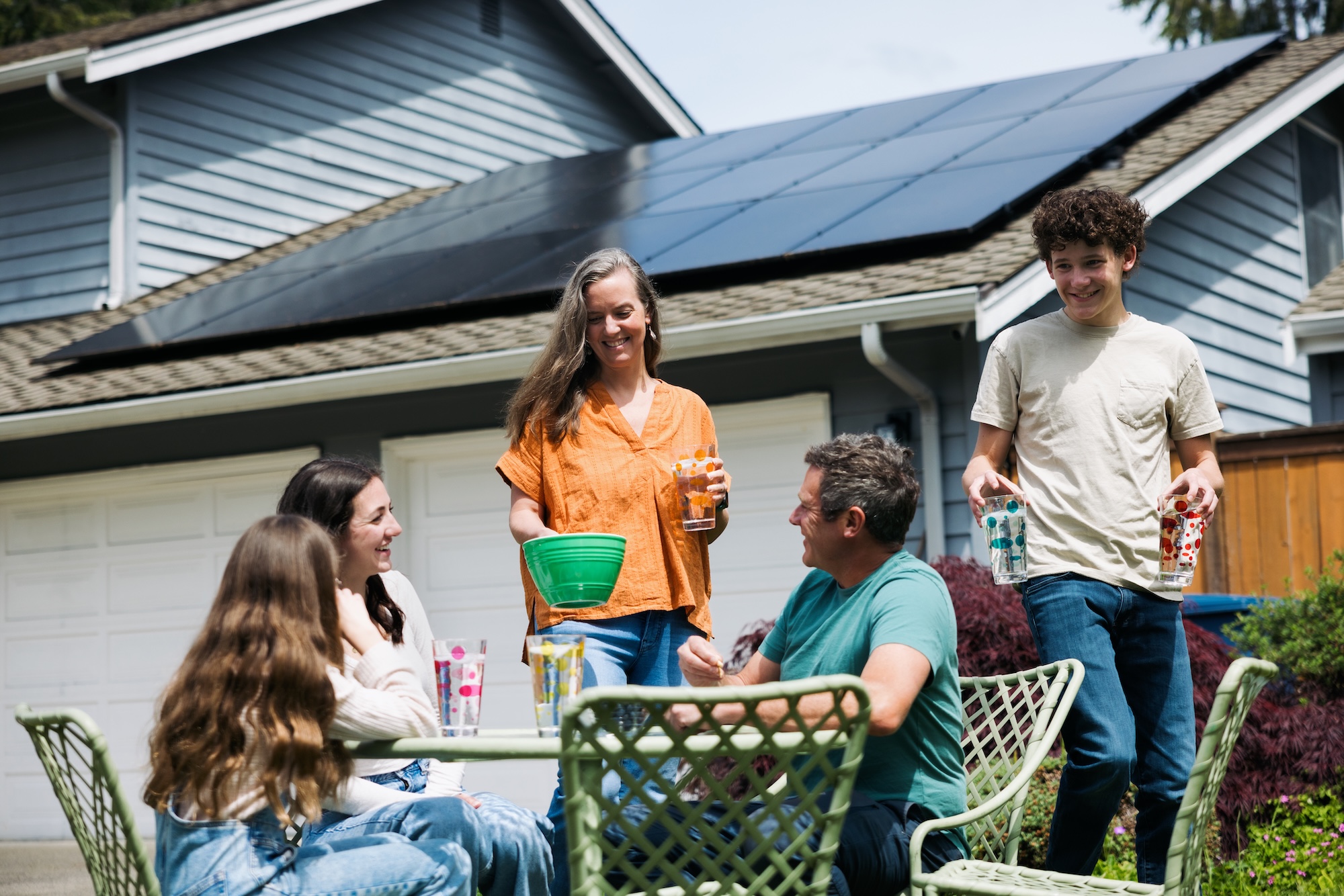
More homeowners across Illinois’s second-largest city are looking into solar every year, not because it’s free (it isn’t), but because it reduces what you owe ComEd every month and builds equity instead of renting your power indefinitely. Here’s why solar makes sense in the Aurora area right now.
Lower Your Monthly Bill
Generate your own power and reduce what you owe ComEd every month, with $0-down financing options available through our lease/PPA partner.
Built for Fox Valley Weather
Aurora and the Fox River valley see humid summers and genuinely cold, snow-heavy winters. Panels are mounted and angled to shed snow and hold up to seasonal swings, not just perform on a mild-climate spec sheet.
A Growing Presence, Built on a Real Track Record
Backed by a completed install cluster in nearby Elgin (also Kane County) and 61 completed installs across Illinois, plus 2,000+ company-wide. Real streets below, not stock photos.
You’re Already Paying for Power. Why Not Own It?
Every month, a payment leaves your account for electricity, and that money buys you nothing you keep. Here’s the real difference between renting your power and owning it.
What Makes SolQ Different in Aurora
Aurora-area homeowners have national call-center installers and door-to-door sales teams pitching Illinois Shines like a coupon. Here’s what sets SolQ apart.
A Real Track Record, Not a Startup Pitch
More than 2,000 completed installations to date across our markets, including 61 completed installs across Illinois and a real cluster in nearby Elgin. A verifiable operating history, not a new logo and a sales script.
Verified Credentials, Not Just Claims
NABCEP-certified installation, an A+ BBB rating, and EnergySage’s 2026 Local Installer of the Year award. All independently verifiable, not self-reported.
We Explain Illinois Shines Instead of Overselling It
RECs, program capacity, and ComEd’s rebate eligibility explained honestly and specific to your address, not a generic “go solar for free” pitch.
A Financing Fit, Not a Sales Quota
$0-down Lease or PPA options through LightReach, or ownership through a Salal Credit Union loan or cash purchase. We walk through both so you choose what actually fits your goals.
How Home Solar Actually Works
Understanding how a residential solar system works helps you ask the right questions before you sign anything. Here’s the short version.
Solar Panels
Mounted on your roof, panels convert sunlight into DC electricity. We size the array to your household’s actual usage, not a generic package.
Inverter
Converts DC power from the panels into the AC electricity your home actually runs on, the same current ComEd delivers.
Utility Meter
Tracks power flowing to and from the grid under ComEd’s tariff, so your system’s production is measured and credited accurately.
Monitoring
Track production from your phone, so you always know exactly what your system is generating.
What to Expect: Your Solar Installation Timeline
Illinois timelines run longer than some states because Illinois Shines processing and ComEd interconnection review add steps beyond installation itself. Many projects are installed within 30 to 60 days of signing; we’ll give you a project-specific timeline before you sign anything.
Free Consultation & Usage Review
We review your last 12 months of ComEd usage and use industry-leading design software to model your roof’s sun exposure and shading.
Custom System Design & Financing
We size your system to actual usage, and you choose the financing route (Lease/PPA or cash/loan) that fits your goals.
Illinois Shines Application & Interconnection
We handle the Illinois Shines project application through our Approved Vendor and file the interconnection application with ComEd on your behalf. This step is often the biggest factor in overall timeline.
Installation Day
Our NABCEP-certified crew installs your system. Most residential jobs are completed in a day or two, depending on system size.
Inspection & Permission to Operate
Local inspection and ComEd’s permission-to-operate sign-off happen before your system is switched on.
Monitoring & Ongoing Support
You get app access to track production in real time, and SolQ stays available if you ever have questions about your system.
Real Proof: Solar Installs In and Around Aurora
We don’t yet have completed installs within Aurora city limits, but we have a real, verifiable install next door in Elgin, also in Kane County, at 50.5–51.0 kW. The real street, honestly:
Street name shown, no address. From our completed project records, current as of July 2026. We’re building local proof honestly rather than inflating a number, backed by 61 completed Illinois installs and 2,000+ company-wide across our broader footprint.
Real Customers, Real Stories
Hear directly from homeowners who made the switch with SolQ.
Serving Aurora, North Aurora, Montgomery, Oswego, Sugar Grove, Batavia, and Surrounding Communities
Aurora is Illinois’s second-largest city, with roughly 181,500 residents, and a genuinely unusual footprint: one of the few Illinois cities spanning four counties, with the bulk in Kane County and the rest reaching into DuPage, Will, and Kendall. The Fox River runs through downtown, where the historic Paramount Theatre anchors a revitalized arts district. Aurora earned its “City of Lights” nickname honestly: in 1881 it became one of the first U.S. cities with an all-electric street lighting system, formally adopting the nickname in 1908. Major local employers and institutions include Rush-Copley Medical Center, Aurora University, Waubonsee Community College, and Hollywood Casino Aurora, alongside the Aurora, East Aurora, and West Aurora school districts. SolQ installs throughout ComEd’s territory across Aurora, North Aurora, Montgomery, Oswego, Sugar Grove, and Batavia, and separately serves nearby Naperville, Joliet, and Elgin. If ComEd powers your home in or around Aurora, we can likely put you on solar. For full ComEd rate, rebate, and net-metering details across the territory, visit our ComEd Illinois hub. For a broader look at Illinois utilities, Illinois Shines, and how the process works statewide, visit our Illinois solar hub.
Check Coverage for My AddressIs Your Aurora-Area Home a Good Fit for Solar?
Most Aurora-area homes are strong solar candidates. Here’s what we actually check before we design your system.
Roof Direction
South- and west-facing sections get the most consistent sun. East-facing roofs still perform well; production just shifts to a morning peak.
Shading
Mature trees near Aurora’s established neighborhoods along the Fox River may need trimming. We use precision design modeling plus an on-site check during your free consultation, not a guess from a satellite photo.
System Sizing
Sized to your last 12 months of ComEd usage, not your roof size. Bigger homes, EVs, and heat pumps often need a larger array, which is part of why residential systems vary so much from one household to the next.
Your Home’s Roof Type
From established homes near downtown Aurora to newer builds in Oswego, Montgomery, and Sugar Grove, roof type matters less than available sun-facing space and your usage.
Financing Options
Lease or PPA $0 DOWN
A multi-year lease or power-purchase agreement with no upfront cost, through financing partner LightReach. You pay a fixed monthly lease payment or a per-kWh rate for the power produced, not ownership of the equipment.
Cash or Loan Purchase
Own your system outright with no ongoing lease or PPA payment. Loan options through Salal Credit Union, with term and rate disclosed in your written proposal.
ComEd: What to Know in the Aurora Area
Our completed Kane County install is on ComEd’s grid, the utility serving Aurora and most of northern Illinois. Here’s the real breakdown, not a one-size-fits-all pitch, including one nuance specific to Aurora.
ComEd
Northern IllinoisCommonwealth Edison (ComEd), headquartered in Chicago, is the electric distribution utility for Aurora and most of northern Illinois, including all four counties the city touches. Aurora also runs a Green Municipal Electric Aggregation Program, letting residents buy electricity supply through a city-selected third-party supplier instead of ComEd’s default rate. That only changes who sells you the electrons; ComEd still owns the wires and poles, reads your meter, handles outages, and is the utility your solar system interconnects with, regardless of which supplier is on your bill. New systems in ComEd territory are eligible for a one-time Solar Generation Rebate of $300 per kilowatt of installed capacity (smart inverter required, capacity capped at 5,000 kW), typically paid by check within about 90 days of energization. A separate $300-per-kilowatt-hour Battery Storage Rebate is available, but it requires enrollment in ComEd’s Rate BESH (Hourly Pricing) tariff and can’t be combined with a Community Solar subscription.
Since January 1, 2025, net metering has been closed to new ComEd solar customers; new systems go on ComEd’s net billing structure instead of legacy full-retail net metering. Aurora-area systems interconnected before that date keep full legacy net metering for 30 years from interconnection. We confirm exactly which terms apply to your account before you sign anything.
Illinois Shines: How the Incentive Actually Works
Illinois Shines is the state’s Adjustable Block Program, administered on behalf of the Illinois Power Agency to help the state meet its renewable energy goals. Here’s how it works for an Aurora-area system: when your array generates electricity, it creates Renewable Energy Certificates (RECs), tradable proof that clean energy was produced. Through Illinois Shines, an Approved Vendor can sell those RECs into the program for payment, typically used to help offset your system cost. SolQ is a registered Designee under multiple Approved Vendors participating in Illinois Shines. We are not the State of Illinois, the Illinois Power Agency, the Illinois Commerce Commission, or ComEd, and we don’t control REC pricing or program capacity.
A few things worth knowing upfront: REC value depends on current program pricing and available block capacity, both set by the program administrator, not SolQ, and both change over time. This is factored into your financing rather than paid to you directly in most cases. If your system’s RECs are sold into Illinois Shines, you’re being compensated for that environmental attribute; you aren’t separately claiming the system was “free,” and we won’t tell you it is. We’ll show you the program mechanics that apply to your specific Aurora-area proposal, not a number pulled from an old rate card.
Net Metering in Illinois: What Changed
If you’ve heard Illinois solar rules “changed” and weren’t sure what that meant, here’s the straight version for Aurora-area homeowners.
Net Billing, Since January 2025
Since January 1, 2025, new ComEd solar customers are placed on net billing rather than legacy full-retail net metering. This applies to systems interconnected from that date forward.
Existing Solar Is Grandfathered
If your system was installed and interconnected before December 31, 2024, you keep full legacy net metering for 30 years from your interconnection date.
A One-Time Rebate Is Available
ComEd offers a one-time Solar Generation Rebate of $300 per kilowatt of installed capacity, plus a separate $300 per kilowatt-hour Battery Storage Rebate for enrolled Rate BESH customers. Not a recurring credit.
Aurora’s Municipal Aggregation Is Separate
Aurora’s municipal electric aggregation program only changes your electricity supplier, not your interconnecting utility. ComEd still handles your solar interconnection, meter, and net billing regardless of your city-selected supplier.
Illinois Solar Incentives, Straight Talk
No State Income Tax Credit
The Aurora area’s solar economics run through Illinois Shines’ REC value and ComEd’s Solar Generation Rebate, not a state income tax credit, which Illinois doesn’t offer. Be wary of anyone pitching one.
Property Tax: Capped, Not Exempt
Illinois uses an alternate valuation that assesses your home as if it had a conventional heating/cooling system, applying whichever value is lower. It caps the tax impact rather than exempting it, and isn’t automatic; you (or SolQ) file with your county assessor, whether that’s Kane, DuPage, Will, or Kendall County.
Federal Credit: Financing-Dependent Now
The 30% federal residential credit (Section 25D) ended for cash and loan purchases not completed by December 31, 2025. Lease and PPA agreements can still pass through a federal credit through 2027 under a separate provision. See our FAQ for the honest breakdown.
Built Around Illinois’s Rules, Not a National Template
From ComEd’s net billing structure and rebate mechanics to Illinois Shines REC economics, every Aurora-area proposal starts with your actual utility and program terms, not a copy-pasted savings estimate from a national call center.
Get Your Free EstimatePremium Equipment We Install
NABCEP-certified installation using trusted equipment, sourced through distributor CED Greentech. Panels shown below reflect what we’ve actually installed across our Illinois and Chicagoland projects, including our nearby Elgin cluster.


See what solar could mean for your Aurora-area home
Free, no-obligation estimate. No “free solar” pitch, no pressure.
Get My Free Solar DesignFrequently Asked Questions
Is solar really “free” in the Aurora area?
No, and we’ll never tell you it is. Illinois Shines pays for the RECs your system produces, which can meaningfully offset cost, but it isn’t free equipment or installation. A $0-down Lease or PPA means no upfront cash from you, not that the system has no cost; you pay for the power it produces over the contract term instead.
Is SolQ affiliated with the State of Illinois, the Illinois Power Agency, or ComEd?
No. SolQ is an independent solar installer and a registered Designee under multiple Approved Vendors participating in Illinois Shines. We are not the State of Illinois, the Illinois Power Agency, the Illinois Commerce Commission, or ComEd, and we don’t set program rules, REC pricing, or utility rebate terms — those are set by the program administrator and ComEd.
I’ve heard Aurora has its own electric utility. Does that affect my solar interconnection?
Aurora doesn’t operate its own electric distribution utility. The city runs a Green Municipal Electric Aggregation Program letting residents choose their electricity supplier instead of ComEd’s default rate, but that only changes who sells you the electrons. ComEd still owns the wires and poles, reads your meter, and is the utility your system interconnects with, no matter which supplier is on your bill.
Is the federal solar tax credit still available in the Aurora area?
For cash and loan purchases, no. The 30% federal residential credit (Section 25D) ended for systems not completed by December 31, 2025. Lease/PPA customers still benefit indirectly: our financing partner owns the system and claims a separate federal credit for commercial-owned solar (Section 48E, active through 2027), part of how they offer $0-down payments below what you’re currently paying ComEd. We’ll walk through what applies before you sign anything.
Do I keep the RECs from my Aurora-area solar system, or does SolQ?
It depends how you finance. If you own your system (cash or loan), you own the RECs and can choose whether to sell them into Illinois Shines. If you finance through a Lease or PPA, the financing company typically owns the system and its RECs unless your contract states otherwise. We’ll show you what your agreement says before you sign.
How does ComEd credit my solar production now that net metering has changed?
Since January 1, 2025, new ComEd solar customers are placed on net billing rather than legacy net metering. Systems interconnected before that date keep full legacy net metering for 30 years from interconnection. SolQ confirms which structure applies to your account before you decide.
How much does a solar system cost for an average Aurora-area home?
Cost depends on system size, roof condition, and financing choice. SolQ provides a written estimate, not a guaranteed savings figure, after a site-specific review of your ComEd usage.
Who are SolQ’s financing partners?
For Illinois homeowners, SolQ offers $0-down Lease and PPA options through LightReach, and loan financing through Salal Credit Union for those who want to own their system outright.
Does Aurora have any city-specific permitting requirements?
Permitting requirements vary by municipality across the Kane, DuPage, Will, and Kendall county portions of the Aurora area. SolQ confirms specific requirements for your address during the proposal process, alongside the ComEd interconnection filing.
What kind of warranty comes with my system?
Most solar panels carry a 25-30 year manufacturer warranty (terms vary by brand), most batteries carry a 10 year warranty, and inverters typically range 10-25 years. Lease/PPA agreements through LightReach typically include a bumper-to-bumper warranty with a production guarantee for the full term.
What areas around Aurora does SolQ serve?
SolQ installs throughout ComEd’s Aurora-area service territory, covering Aurora, North Aurora, Montgomery, Oswego, Sugar Grove, and Batavia, with dedicated coverage of nearby Naperville, Joliet, and Elgin.
How long does an Aurora-area solar installation take, start to finish?
Many projects are installed within 30 to 60 days of signing, though Illinois Shines processing and ComEd interconnection review can extend timelines in some cases. Installation itself is usually done in a day or two.
Does solar keep working during a power outage in the Aurora area?
Not by itself. A grid-tied system without battery storage shuts off automatically during a ComEd outage, a safety requirement so it doesn’t backfeed power onto lines utility crews may be working on. Adding a Tesla Powerwall 3, one of the battery options SolQ installs, lets your home draw on stored power during an outage instead of going dark. We’ll walk through whether backup makes sense for your household before you decide.
Does solar still work on cloudy or winter days in the Aurora area?
Yes, panels still generate power from indirect and diffuse light on cloudy days, just at reduced output compared to full sun. Illinois sees real seasonal swings, more production in long summer days, less in short winter ones, which is exactly why systems are sized to a customer’s actual 12-month ComEd usage rather than a single sunny-day estimate.
Can renters or homes with an HOA go solar in the Aurora area?
Solar installation requires ownership or the property owner’s authorization, so renters would need their landlord’s sign-off. For homes governed by an HOA, Illinois state law limits how much an association can restrict solar installation, though individual HOA rules on panel placement and aesthetics still vary. We check for any HOA requirements tied to your specific the Aurora area address as part of the proposal.
Does solar add resale value to a home in the Aurora area?
An owned system (cash or loan purchase) generally adds real value since the buyer inherits free electricity production, and Illinois’s alternate property-tax valuation helps limit the assessment impact of that added value. A leased or PPA system transfers differently: the new owner typically needs to qualify to assume the agreement, worth discussing with us before you list your home, not after an offer is on the table.
Ready to Get Started?
Schedule a Free ConsultationSolQ is an independent solar provider and a registered Designee under multiple Approved Vendors participating in Illinois Shines. SolQ is not affiliated with, endorsed by, or acting on behalf of the State of Illinois, the Illinois Power Agency, the Illinois Commerce Commission, ComEd, the City of Aurora, or any government agency. “Illinois Shines” and the Adjustable Block Program are administered by the Illinois Power Agency and its program administrator, not SolQ. REC pricing and Illinois Shines block capacity are set by the program administrator and change over time; figures on this page are general program information, not a quote or guarantee for your system. Solar RECs compensate you for your system’s environmental attributes, not a rebate on equipment, and selling them does not make a system “free.” Savings, rebate, and incentive figures shown are estimates, not guarantees; actual results vary by system, usage, and current program terms. The federal residential solar tax credit (Section 25D) ended for cash/loan purchases completed after December 31, 2025; a separate credit may apply to third-party-owned Lease/PPA systems through 2027. Financing offered through third-party partners (LightReach for Lease/PPA, Salal Credit Union for loans); terms are disclosed in your specific agreement and subject to partner approval. Illinois’s property tax treatment of solar is an alternate assessment method, not a full exemption, and requires an application to your county assessor; confirm current eligibility with your tax advisor. Aurora’s Green Municipal Electric Aggregation Program is a supply-only arrangement; it does not change ComEd’s role as the interconnecting distribution utility. Population and geographic figures are estimates from published sources and may change. Content verified as of August 2026.