


Your Local Illinois Solar Installer
SolQ is headquartered at 3804 N Cunningham Ave in Urbana — not a call center routing your info to a stranger three states away. When you search “solar installers near me” in central Illinois, we’re the local team that actually shows up: the same people who design your system are the ones who answer the phone, and the same crew that’s on your roof is on your neighbor’s roof next week. We install across ComEd and Ameren Illinois territory, with crews regularly working in Champaign–Urbana, Decatur, Danville, Bloomington, and Springfield.
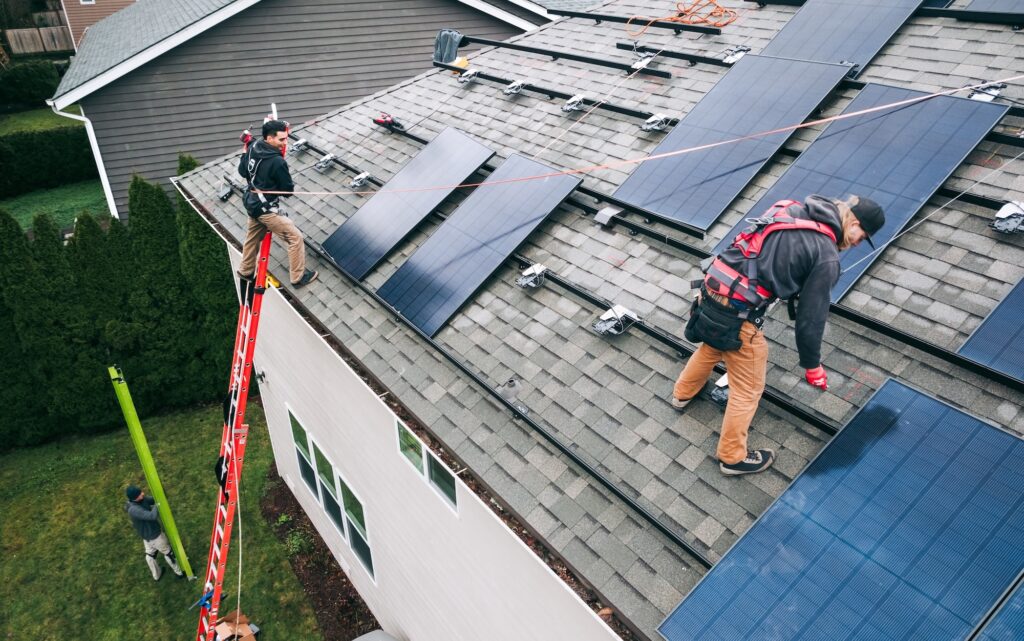


Real SolQ installs, real in-house crews — 4.8★ on Google (413 reviews) and A+ with the BBB.
Why Illinois Homeowners Are Switching Now
This isn’t a generic “rates go up” pitch. Here’s what’s actually happening on the grid you’re connected to, right now.
- ✓The grid is being rebuilt around data centers, not homeowners. ComEd buys power through the PJM regional grid, where wholesale prices jumped 76% year-over-year in Q1 2026 and capacity costs are up roughly 400% — PJM’s own independent market monitor has traced billions of that increase directly to the data centers being built across the region to run AI workloads. That demand isn’t competing with other data centers for capacity. It’s competing with you.
- ✓Lock in your rate. Once your system is installed, your cost for the power it produces is fixed by contract — it doesn’t move every time ComEd or Ameren raises rates to pay for new transmission and generation capacity.
- ✓Net metering isn’t unlimited. Illinois guarantees net metering today, but ComEd’s program is capped by law at 5% of the utility’s total peak demand from the prior year — it isn’t an open-ended right. Nationally, state after state has already scaled back or replaced traditional net metering as solar adoption grows. Illinois hasn’t announced an end date, but nobody can promise today’s terms apply forever to whoever signs up last.
- ✓$0 down, real rebate checks on top. Most homeowners we work with start with a Lease or PPA, so there’s no large payment to make the switch. ComEd and Ameren Illinois also pay a one-time Distributed Generation rebate ($300/kW) plus a battery storage rebate ($300/kWh) — together these may add up to roughly $4,000–$12,000, paid directly to you, separate from your financing. Your exact eligible amount is confirmed before you sign anything; treat it as an amount you may qualify for, not a guarantee.
- ✓Add battery backup. Keep essentials running through an outage, and a battery may also qualify your system for the additional rebate above.
Staying With The Utility vs. Going Solar
Side by side, the choice gets a lot easier to see.
- ✕Rate set by the utility — ComEd’s residential supply price alone is up ~47% year-over-year
- ✕No vote in ICC-approved delivery rate increases
- ✕Competing for PJM grid capacity against AI data centers
- ✕$0 back — no rebate for staying on standard service
- ✕Every year you wait is another year of paying whatever they set next
- ✓Your production cost is fixed under your agreement, starting day one
- ✓Lock in your rate, independent of future ICC rate cases
- ✓Generate your own power, on your own roof
- ✓Up to $4,000–$12,000 in utility rebates you may qualify for, filed for you
- ✓Locking in now means next year’s rate case doesn’t touch you
Rebate eligibility, exact savings, and system cost depend on your home and usage — confirmed before you sign anything.
The SolQ Difference
There’s no shortage of solar companies calling Illinois homeowners right now. Here’s what’s actually different about working with a local installer instead of a national sales operation.
Custom designs, not a template
We design every roof in Aurora Solar — widely considered the leading solar modeling platform in the industry, built on satellite imagery and LiDAR-based shading analysis. Your panel layout, production estimate, and system size are modeled for your roof’s exact angles and shading, not stretched from a generic template.
White-glove project management
One dedicated team owns your project from design through activation, with proactive updates at every milestone — design approved, permit filed, install day confirmed, system activated — and a real person to call, not a ticket number. Most projects run about two to three months start to finish.
In-house installation crews
We don’t subcontract your install out to whoever’s available that week. SolQ’s own crews put your system on your roof, backed by a 10-year workmanship warranty on top of a 25-year equipment warranty.
A reputation we work to keep
4.8★ across 413 Google reviews, A+ rated with the BBB, NABCEP-certified, and named a 2026 EnergySage Installer of the Year — honestly presented financing, every time, instead of whatever’s easiest for us to sell.
What a Local Illinois Installer Actually Does
Site assessment & Aurora design
We pull your actual annual usage from your ComEd or Ameren bill, model your roof in Aurora Solar, and confirm everything with an on-site visit before a single number goes in your proposal.
Permitting & interconnection
Every municipality and utility has its own permitting process. We file the paperwork, handle ComEd or Ameren Illinois’s interconnection requirements, and manage inspections — you don’t have to learn the process to go solar.
Rebate & incentive paperwork
We file the Distributed Generation and battery rebate applications on your behalf and confirm your Illinois Shines REC value as a registered Designee — you’re not left to figure out state and utility paperwork alone.
Installation & activation
Our own crews install your system, typically in one to a few days on-site, followed by inspection and utility sign-off before activation. We stay reachable after activation — it isn’t a one-and-done relationship.
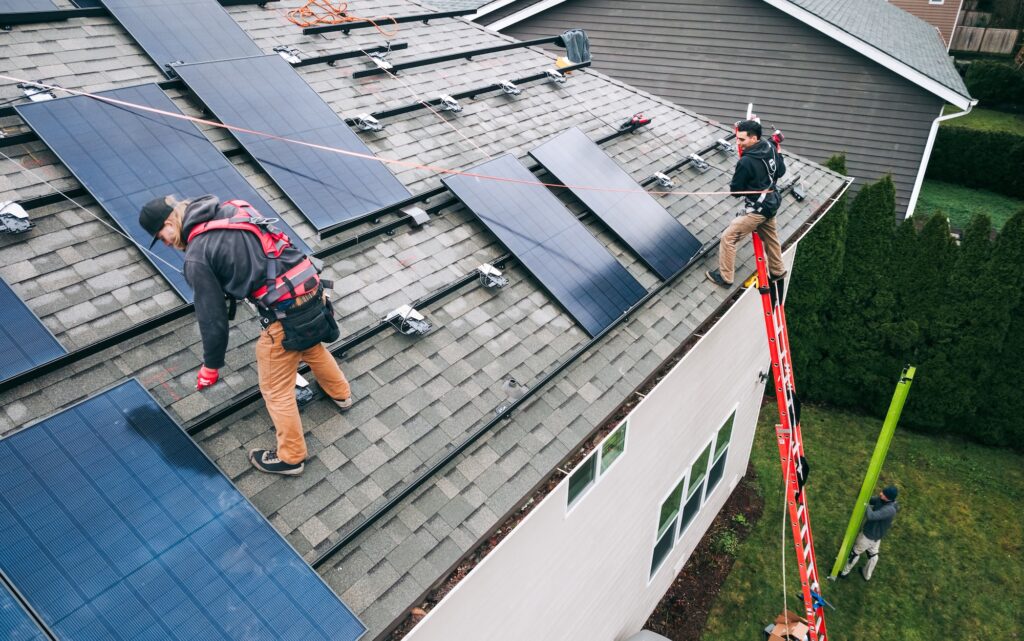
Every step, communicated — you’ll always know exactly where your project stands.
Solar Installers Near You, Across Central & Southern Illinois
Our Urbana headquarters puts us within easy reach of all of these communities — here’s where our crews install most often.
Champaign–Urbana →
Home turf. If you’re looking for solar installers near Champaign or Urbana, our office and most of our install crews are based right here — Ameren territory, with same-day site visits available for most addresses.
Decatur →
We regularly install for Decatur-area homeowners on Ameren Illinois, handling the utility’s interconnection paperwork as part of every project.
Danville →
A short drive from our Urbana base, Danville is solidly in our standard service area with the same install timelines and local crew.
Bloomington →
We install throughout the Bloomington–Normal area, working across both Ameren and ComEd-adjacent accounts depending on your exact address.
Springfield →
Downstate and still well within our coverage — Springfield-area homeowners get the same Aurora-modeled design, in-house install, and Ameren Illinois rebate filing as everywhere else we work.
The Cost of Doing Nothing
Illinois electricity rates have moved in one direction for years. Per the Citizens Utility Board’s own 2026 rate report, ComEd’s residential supply price ran 9.66¢/kWh for January–May 2026, about 47% higher than January 2025, and Ameren Illinois’s supply price ran 8.769¢/kWh for the first 800 kWh of usage, about 6% higher than a year earlier. Delivery charges rose too: the Illinois Commerce Commission approved a $243 million ComEd delivery rate increase and a $48 million Ameren Illinois increase, both effective this year. CUB ties part of the run-up to rising data-center electricity demand across the regional grid — the same demand driver described above, and one that isn’t going away anytime soon.
We can’t tell you exactly what ComEd or Ameren Illinois charges next year — nobody honestly can. What we can say is this: every year you wait is another year of paying whatever number they set, with no ceiling and no say in it, on a grid that’s increasingly built to serve data centers first. Locking in your own generation now, at a fixed cost, is how a lot of Illinois homeowners are opting out of that guessing game.
Meet Your Local Illinois Installer
A custom Aurora-modeled design, your real rebate eligibility, and an honest comparison of $0-down, loan, and cash — from the Urbana team that actually installs it. No obligation.
Get Your Free EstimateWhite-glove communication from first call to activation day — that’s what a 4.8-star rating across 413 reviews is actually built on.
Frequently Asked Questions
How do I choose a solar installer in Illinois?
Look for a local, in-house crew (not subcontracted labor), verified reviews, NABCEP certification, and a company that will show you a custom design — built from your actual roof, not a generic estimate — before you sign anything. SolQ designs every project in Aurora Solar and installs with our own Urbana-based team.
Is SolQ licensed and insured in Illinois?
Yes. SolQ carries liability insurance and holds the licensing required for electrical and solar installation work in Illinois, confirmed as part of every permit filing. We’re also A+ rated with the BBB and NABCEP-certified.
Do you install battery backup in Illinois?
Yes. Adding a battery can keep essentials running through an outage, and it may also qualify your system for ComEd or Ameren Illinois’s battery storage rebate — roughly $4,080 for a typical home battery, which you may qualify for depending on your utility’s current program terms and enrollment requirements. We confirm your specific eligibility before you sign anything.
How long does solar installation take in Illinois?
Most SolQ projects run about two to three months from signed agreement to an activated system, covering Aurora-based design, permitting, ComEd or Ameren Illinois interconnection, and the physical install, which itself typically takes one to a few days on-site.
Why is the grid in Illinois so strained right now?
ComEd’s territory sits inside the PJM regional grid, where wholesale power prices rose 76% year-over-year in Q1 2026, with capacity costs up roughly 400%. PJM’s independent market monitor attributes a significant share of that increase to new data centers coming online to run AI workloads — demand that competes directly with homeowners for the same grid capacity and infrastructure spending.
What is Aurora Solar, and why does it matter for my quote?
Aurora Solar is the solar design platform widely considered the industry leader, using satellite imagery and LiDAR data to model your specific roof — its angles, obstructions, and shading — rather than a generic template. We use it to design every SolQ project, which is part of how we size a system and production estimate that actually matches your roof.
What does “white-glove” project management actually mean?
It means one dedicated team owns your project from your first call through activation — the same people who design your system handle permitting, ComEd/Ameren interconnection, and scheduling, and proactively update you at every milestone instead of waiting for you to call and ask. You get a real person to reach, not a rotating call center.
Is it better to go solar now or wait?
Waiting doesn’t pause ComEd or Ameren rate cases, PJM capacity costs, or Illinois’s net metering cap — those move on their own schedule, not yours. Every year on standard utility service is a year without a fixed cost for the power you use. There’s no cost to find out your specific number today, so most homeowners choose to at least see it.
See our full Illinois solar cost guide or read our complete Illinois & Iowa solar tax credit and incentive guide for the full, verified breakdown of what applies in 2026.
SolQ is an independent solar provider and a registered Designee under multiple Approved Vendors participating in Illinois Shines. SolQ is not affiliated with, endorsed by, or acting on behalf of the State of Illinois, the Illinois Power Agency, the Illinois Commerce Commission, ComEd, Ameren Illinois, PJM Interconnection, or any government agency. ComEd and Ameren Illinois one-time Distributed Generation and battery storage rebates are utility programs with their own eligibility rules; your system may qualify, subject to confirmation at the time of your proposal, and no specific dollar amount is guaranteed. Net metering program caps and future terms are set by Illinois law and utility tariff, not by SolQ, and are subject to change. PJM capacity and wholesale price figures are sourced from public PJM market monitor reporting and industry news coverage current as of early 2026 and are subject to change. Electricity rate figures are sourced from the Citizens Utility Board’s public 2026 rate reporting. The federal residential solar tax credit (Section 25D) ended for cash/loan purchases completed after December 31, 2025; a separate credit may apply to third-party-owned Lease/PPA systems through 2027. Financing offered through third-party partners (LightReach for Lease/PPA, Salal Credit Union for loans); terms are disclosed in your specific agreement and subject to partner approval. Typical installation timelines are estimates based on recent projects and are not guaranteed for every address. No results, savings amount, or payback period is guaranteed. Content verified as of October 2026.